Friday, October 26, 2012

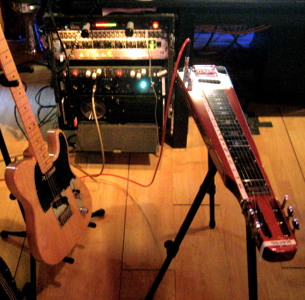
The Work Room 2012


View From The Studio Door 


View From The Amp Closet 


The Guitar Effects Racks 


The Amp Closet 


Friday, October 12, 2012

Purple Fender Squire Double Fat Strat

I seem to have a thing for odd Fender Squire's. This is a guitar I bought at Guitar Center in 1999 on an ugly color discount.  It's another odd ball being a Strat with two humbuckers. At the time I was making mostly electronic music, but wanted a cheap electric guitar as a studio beater. I didn't really know anything about guitars other than this one was cheap, $149 out the door. 


Ironically this has turned out to be a pretty good guitar. I also bought a Vox Cambridge 15 practice amp at the same time. It too, and in use with this guitar are surprisingly fun to play. Today I keep these two in the house as my practice set-up. 


Thursday, October 11, 2012

Fender Squire DuoSonic (re-issue) w/ Mods

Sorta odd guitar, but I was drawn to it. I've been looking for a cheap guitar to string in "Nashville Tuning" not sure this is gonna be it. But it was cheap, so we'll see how this goes. Groovy... 


Basswood body with gloss polyester finish
1-Piece Maple, Modern C Shape neck
9.5 in radius maple fingerboard
21 medium jumbo frets
2 Custom Vintage Style Single-Coil Duo-Sonic® Pickups with AlNiCo 5 Magnets
Vintage Style Top-Load Hardtail Bridge with 3 Barrel Compensated Brass Saddles
Master volume and master tone controls with Gibson 3 position pickup selector switch

and...

- upgraded Gibson 3-way switch
- orange drop capacitor which opens up the pickups
- compensated brass saddles instead of the original steel ones


Sunday, October 7, 2012

Big Sur : Wide Guitars Demo Sketch (Soundtoys Crystallizer)

This is how a lot of my tracks start. Just a basic drum loop and then I find a couple chords I like and just try to play them well enough to get a decent rhythm track down. Once that's done, I'll double (or in this case copy) the part and try to add some space to it by effecting it and hard panning the two tracks.


You can see from the screen shots below this is really just the bare minimum to get the raw idea out. A lot of my process is trying to find a vibe. Recording for me is a lot like sculpture as I try to figure what to take out to make room for other parts and ideas.

In the tracking screen shot here there's only 4 parts comprised of six channels of audio total:

1) Drums from Toontrack's Superior Drummer - Stereo
2) The basic rhythm part played on the Telecaster recorded - Mono
3) The duplicate (copy) of the rhythm part w/ SoundToys Crystalizer added - Mono
4) Effects Returns of the basic rhythm part processed in Eventide Effects - Stereo


In the mixing screen shot you can see minimal use of effects plug ins and eq to just give the track enough vibe to start figuring it out. 

Some of these old projects I'm opening up for this blog were recorded in previous versions of Sonar. So when I'm opening them in X1 I'm having to do a little tweaking to adjust the project from previous settings which may have included plugins I'm no longer using. 

One of the really nice things about Sonar X1 is the Pro Channel with compression and EQ on each channel. I also like the way Sonar expands and collapses the channel strip. The compressor allows you to toggle between a sorta 1176 Compressor model and an SSL 4000 series compressor model. The EQ settings also provide three options of "Pure", "Vintage", and "Modern." I'm assuming that Pure is completely digital with no coloration, "Vintage" is some version of a Neve 1073 (I'd hope) and "Modern" is SSL. 


This particular project is using two plugins from my UAD-1 card. Generally speaking, I find the UAD plugins to be the best sounding to my ears. On the Drum Buss I disabled the AUD Roland Space Echo, but I'm still using the UAD LA2A compressor and the UAD RealVerb. 

My Guitar Buss Compressor of choice is the Waves Ren Comp. It just works for me. And finally on the 2 Buss is the tried and true Wave L2 limited for quick and dirty leveling. All of the EQ on this demo track is the Sonar native EQ within X1. 

It may be interesting to listen to the Demo Sketch of Big Sur above, and then listen to this completed version of the song with added Lap Steel, arrangement changes, and effects editing. 


Saturday, October 6, 2012

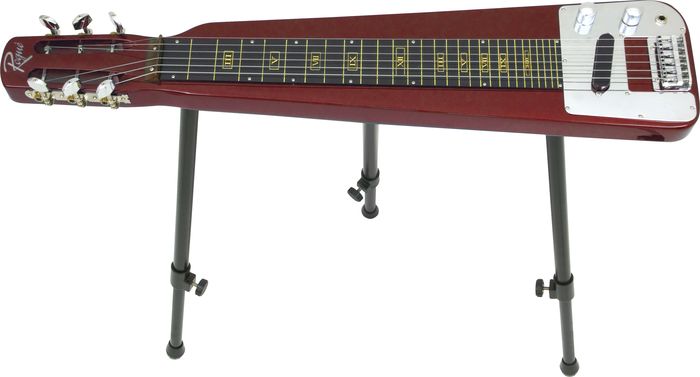
Review and Demo : Rogue AE-3 Lap Steel Basics

For $99 from Musicians Friend you can't really complain about this little wonder! The Rogue AE-3 Lap Steel is a great buy for experimenting with the lap steel / pedal steel sound.


Below are two songs I recorded using the Rogue, see what you think. The Lap Steel was routed through an effects rack to a Fender Pro Jr amp, mic'd with an SM57. From there the mic was run into a Universal Audio 2-610 pre-amp, then to a Emperical Labs Distressor and finally an Apogee Rosetta 800 / RME 9652. My recording program of choice is Sonar, now into version X2. I'm still very happy with version X1 and this recording was most likely done in version 6. 

I'll post tracking and mixing screen shots of the sessions soon. If I have time I'll also print these projects as stems for anyone who wants to dig deeper into them and hear the tracks in isolation. 


You'll note that I've tuned the Lap Steel to Open G, which allows for the strumming of a few major chords across all strings when using a slide. Referring to my favorite chords/scale website Guitar Chords Magic you can see that the Dmaj chord below is comprised of the notes D, F# and A which are all played while barred with the slide across the 7th fret. I can play the Cmaj chord while playing the 5th fret, and I can play the Gmaj chord on the 12th fret.

The minor chords in the scale of Gmaj require moving the slide down one fret on the note that is the third in the chord. I don't know that people really strum a pedal steel, so this is good starting place to practice small moves between the major and minor chords.


You can see how to play more chords in Open G tuning here at Jamplay.com. 

Using my other favorite website, Bob Craypoe's Dr. Psychotic, here's what chords in the key of Gmaj look like in Standard Tuning, say on my Telecaster (pictured above).